Using PCR effectively in the material cycle
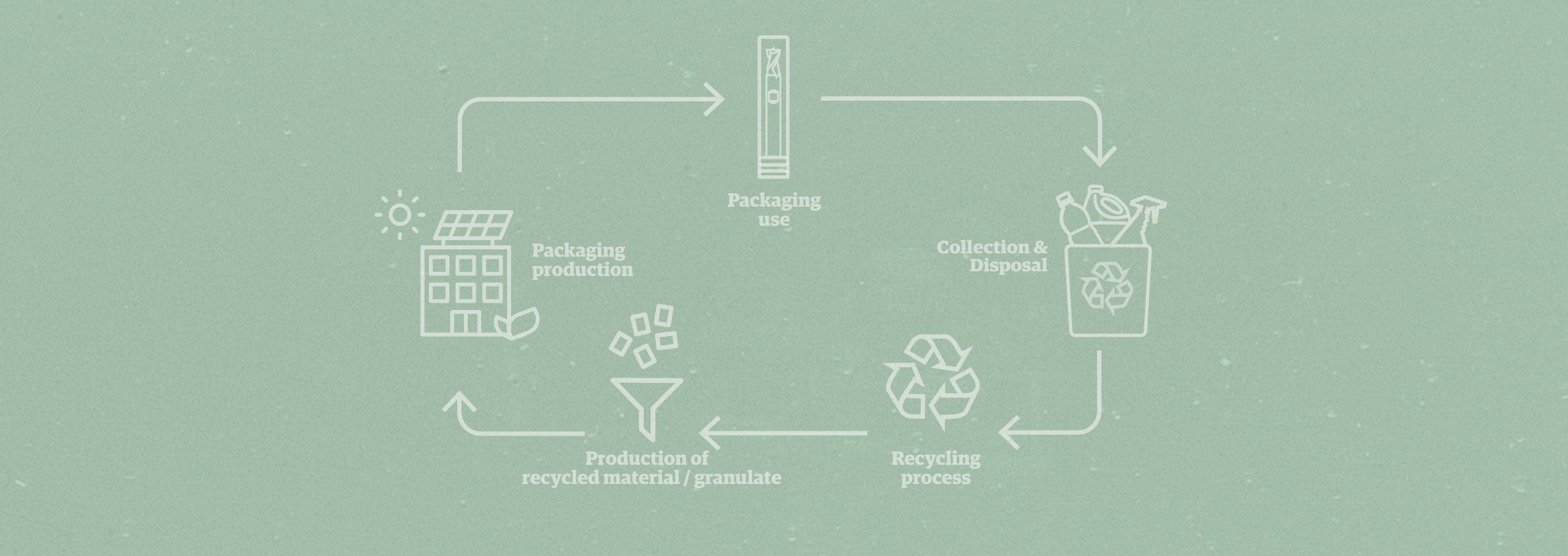
PCR returns plastics from the waste stream to the value chain and can help reduce the need for fossil-based raw materials. Whether PCR is the right choice, however, depends on the specific application and its requirements — including quality, color consistency, odor, and availability.
After use, recycled materials are typically recycled again together with other plastics. While chemical analysis can indicate how often a plastic could theoretically be recycled, real-world recycling works differently. In practice, individual plastics are not repeatedly recycled in isolation. Instead, streams of used plastic are sorted, processed, and prepared for new applications — often together with other recycled materials or virgin material. Regular quality control helps ensure consistent quality and properties within the recycled materials.
Whether — and how often — a material can be recycled depends on many factors, including the type of plastic, the quality of sorting and cleaning, the packaging design, and the requirements for the new product. What matters most is that the recovered material can be turned into high-quality recycled material for subsequent use. This is exactly what modern recyclable packaging solutions and the targeted use of recycled materials are designed to achieve.